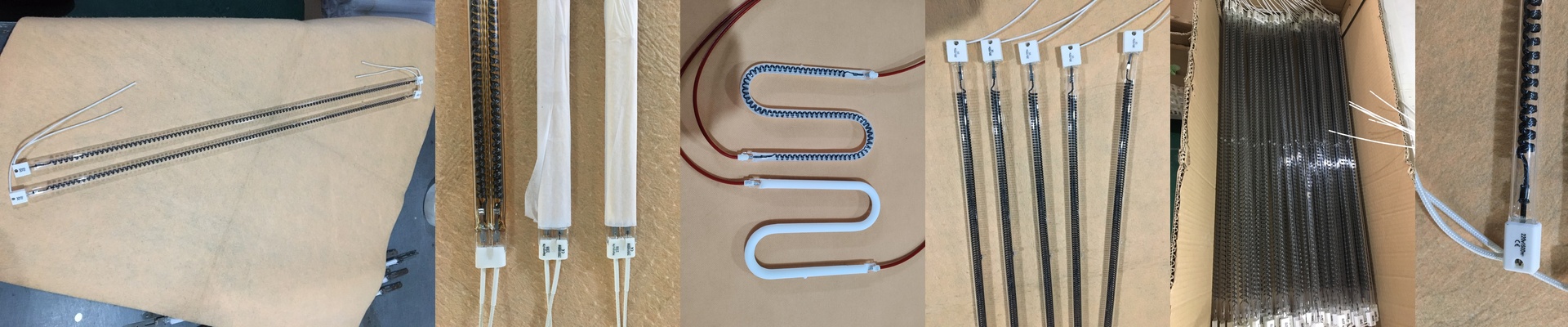
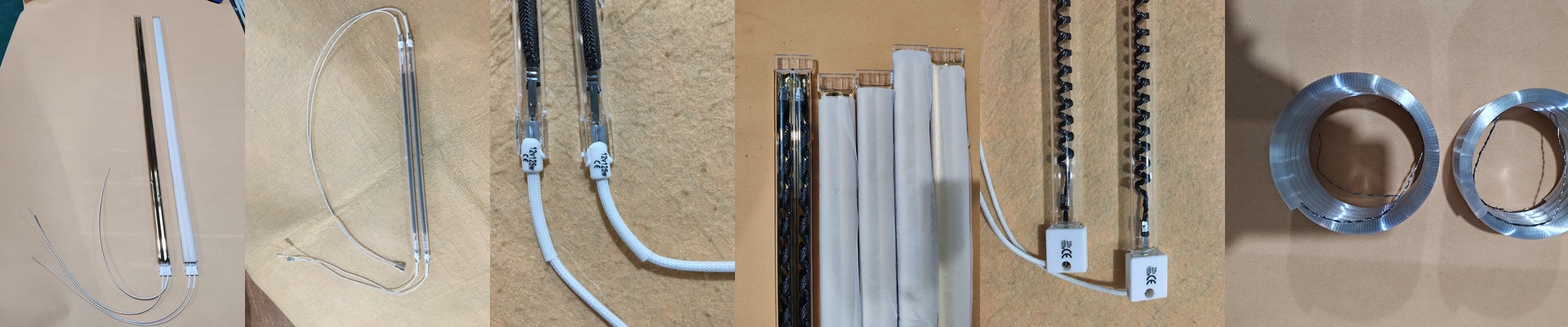
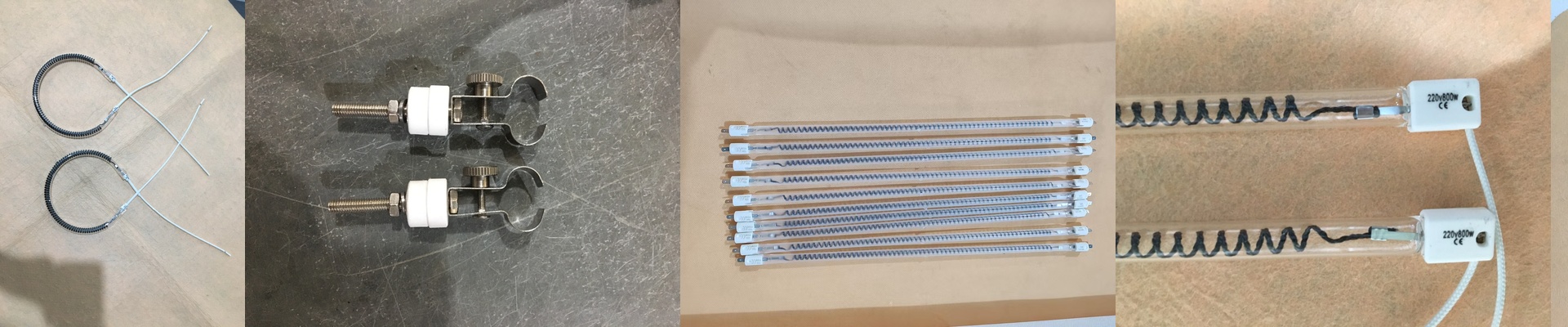
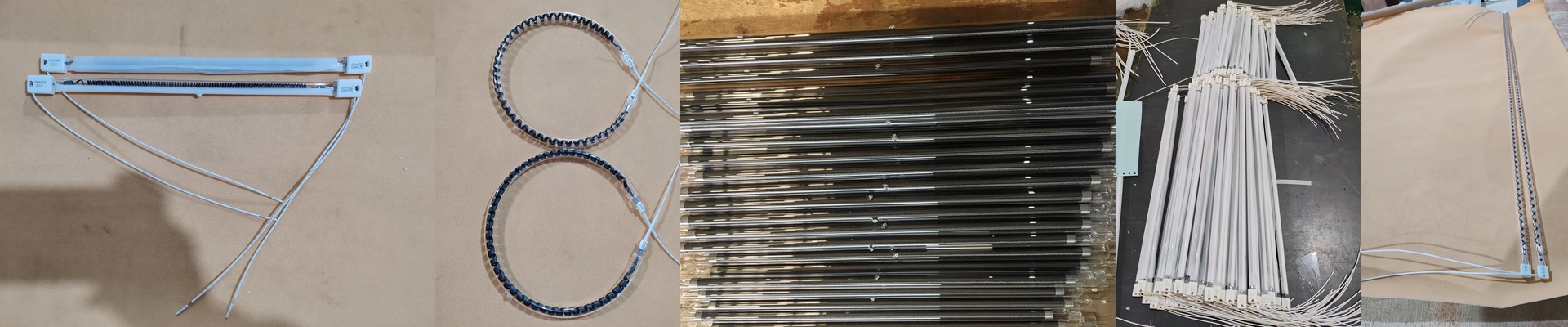
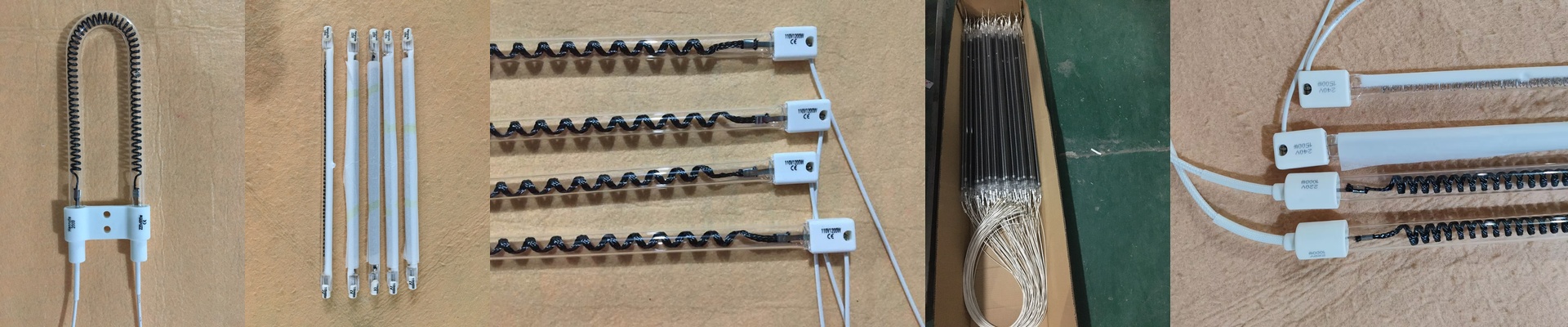
We build carbon fiber infrared quartz heaters for industrial work where heat has to arrive fast, land precisely, and hold steady under long cycles. These are not general-purpose lamps. They are engineered as direct-fit heat sources for machines that need high heat density in a compact footprint.
Technical Deep-Dive: Power, Voltage, and Dimensions
Our carbon fiber IR quartz heaters are specified to deliver high output in a small envelope. You can spec these units at standard voltages and wattages to match the thermal load of your line. Typical configurations run at 230V or 400V, with power ratings that support demanding heating zones. The tube length is chosen to match the target area—shorter tubes concentrate intensity, longer tubes spread the heat band. This matters because infrared delivery is about watts per square centimeter. When you need rapid heating without heating the whole machine frame, you size the heater to the spot, not the room.
Material & Design: Why Quartz, Carbon Fiber, and R7s
The quartz envelope is chosen for thermal shock resistance and high-temperature stability. It allows the internal element to run hot while the outer surface remains robust, which supports consistent infrared output. Inside, the carbon fiber element provides fast resistive heating with low thermal mass. That means the heater comes up to temperature quickly and responds to setpoint changes without a long lag. The R7s base is not an arbitrary choice. It is a standardized, double-ended connector that provides secure mechanical retention and reliable electrical contact in industrial fixtures. You wire it up once, lock it in, and it stays put even with vibration and repeated thermal cycling.
Application & Benefits: Where This Configuration Earns Its Keep
Carbon fiber IR quartz heaters are commonly applied in plastics processing, coating curing, and assembly operations that require localized, high-intensity heat. The combination of rapid response and focused infrared output lets you heat the target directly, reducing wasted energy and limiting the heat load on nearby components. The design is also built as a drop-in replacement for existing R7s-mounted systems, so you can upgrade without redesigning the fixture. One trade-off is real: high power density demands adequate cooling and thermal management in the surrounding equipment. Size the heater to the process, confirm the voltage matches the supply, and ensure the fixture can shed the rejected heat. We build these heaters to be spec’d, installed, and run hard—day after day. If you need a heater that can take the heat and deliver it where you want it, this is the configuration to evaluate.