Introduction
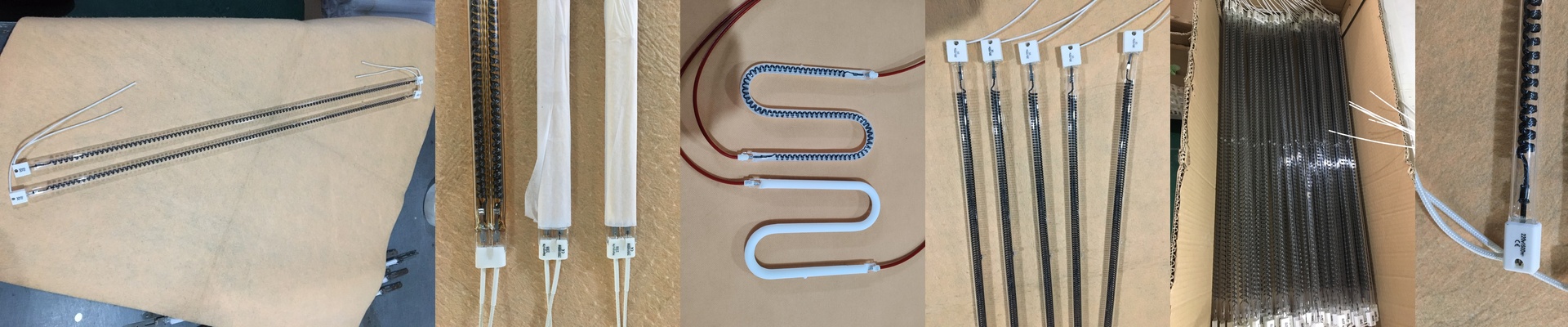
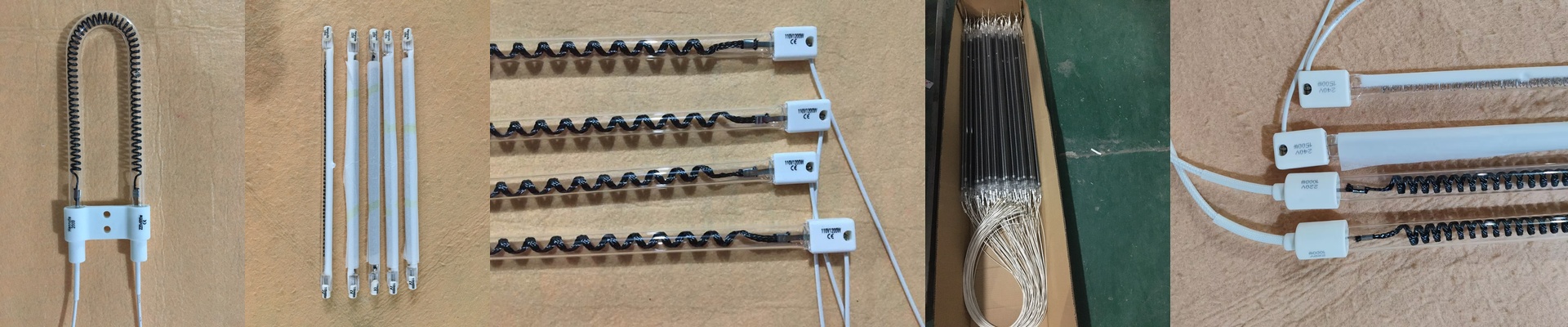
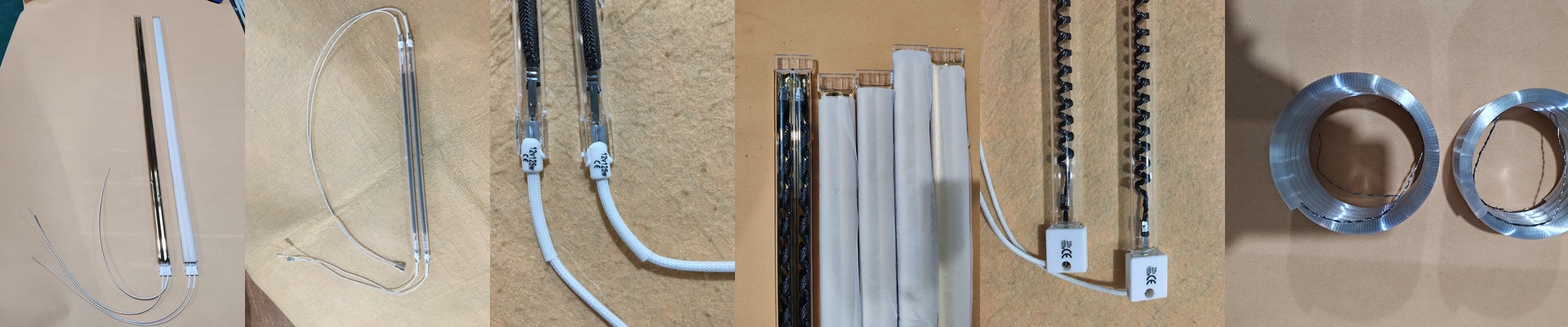
We built the 600mm 1300W carbon fiber quartz heater as a compact, high-output infrared (IR) heat source for industrial machines that need fast response and tight control. This is not a general-purpose element; it is engineered to deliver high heat density in a narrow footprint, where you need process heat quickly without heating the entire machine enclosure.
Technical Deep-Dive: Power, Dimensions, and Electrical Behavior
At 1300W over a 600mm length, the heater produces a linear power density that is intentionally high for a tube of this size. That wattage density drives rapid temperature rise in the target zone, which supports short cycle times and stable setpoints in continuous-duty equipment. The 600mm length gives you a defined heating window—wide enough to cover a typical heating zone, but short enough to fit in compact head-ends and narrow machine bays. Electrically, this heater is designed to run on high-voltage supply, commonly 230V or 400V depending on the system configuration. Running at higher voltage reduces current for the same power, which keeps wiring sizes manageable and drops I²R losses in the supply path. The trade-off is real: high voltage means stricter insulation requirements and a need for proper fusing and contactor ratings. You spec the heater, and we recommend you spec the protection and termination to match.
Material & Design: Carbon Fiber, Quartz, and R7s Termination
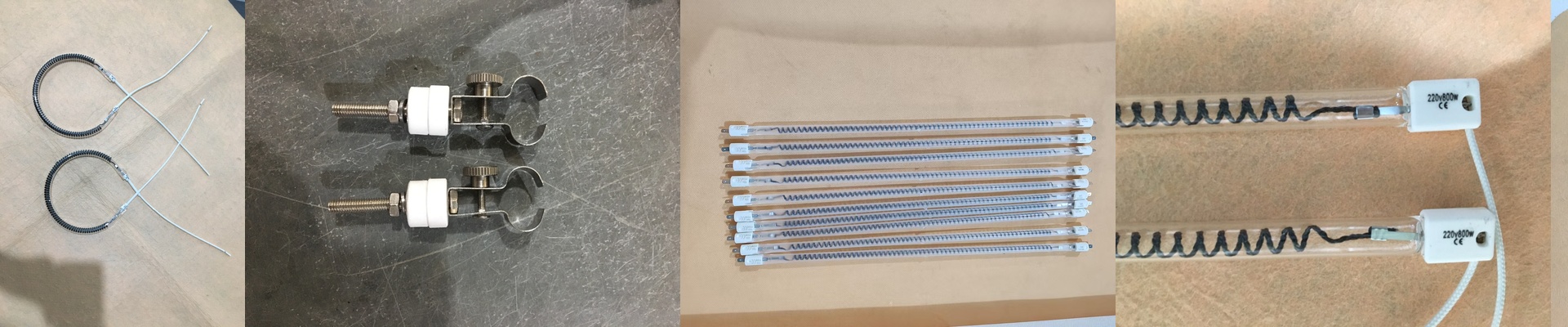
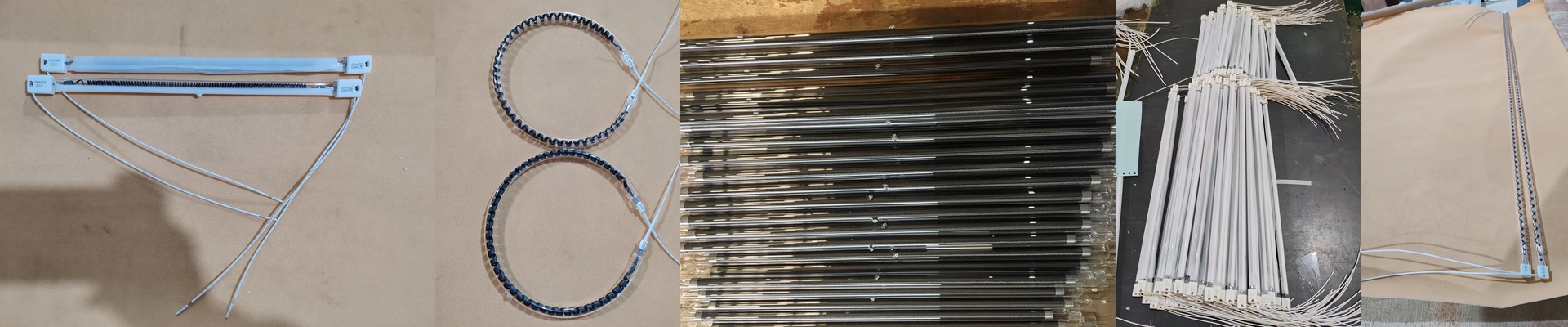
The core is carbon fiber, chosen for consistent resistance across the length and for mechanical stability under repeated thermal cycling. The carbon fiber sits inside a quartz envelope, which gives you two practical advantages. First, quartz withstands thermal shock—you can bring the element up fast without cracking. Second, quartz stays transparent to shortwave IR, so the heat transfers directly to the target with minimal absorption by the envelope itself. We run this as a shortwave IR heater, meaning the output spectrum peaks in the near-infrared range. That spectrum is why it heats surfaces quickly: the energy couples directly into the material rather than slowly heating air. The R7s connector is not an afterthought. It is a standardized, double-ended ceramic terminal that handles high temperatures and provides a stable mechanical hold. It simplifies installation because it is designed to be a drop-in fit in existing R7s sockets on industrial equipment. If your machine uses R7s, you wire it up the same way and you do not need custom brackets or adapters.
Application & Benefits: Where This Configuration Earns Its Keep
This configuration earns its keep in applications that demand high heat density and fast response. Typical fits include plastic processing—especially pre-heating zones in blow molding and extrusion—where the part geometry needs concentrated heat in a short window. It also works in packaging sealing and forming stages that require localized heat without heating the whole press. The benefits are measurable. Fast ramp-up reduces idle time during changeover. The compact 600mm footprint lets you refit older machines without redesigning the entire thermal block. The R7s termination keeps maintenance simple—swap the tube, re-lamp, and get back online. The trade-off is straightforward. High wattage density and shortwave IR mean you must manage reflection and shielding. Without proper reflectors, you lose efficiency; without thermal separation, nearby components can cook. If your cooling and shielding are spec’d correctly, this heater delivers repeatable, controllable process heat in a small envelope.